
Sustainability at Gojo Group
Gojo & Company was founded in July 2014 to extend financial inclusion across the globe, aiming to become a private-sector World Bank. Through this mission, we envision a world where everyone can determine their future. Financial inclusion means access to useful and affordable financial services, and we believe it should be equally available to all people, just like basic human rights. However, such financial inclusion is still not universally provided across the globe. As a global leader in microfinance, we are committed to advancing financial inclusion with a sense of responsibility toward all stakeholders.
Our commitment to sustainability and accountability to all stakeholders is integral to Gojo Group’s mission of extending financial inclusion across the globe. In approaching sustainability, we aim to maximise both our social impact on our clients and other stakeholders, while achieving economic returns and long-term growth at the same time.
We share our progress in financial inclusion and social impact in our annual Impact Report. We are committed to updating this report sincerely and transparently every year. The latest version is available here.
Commitment to Stakeholder Impact
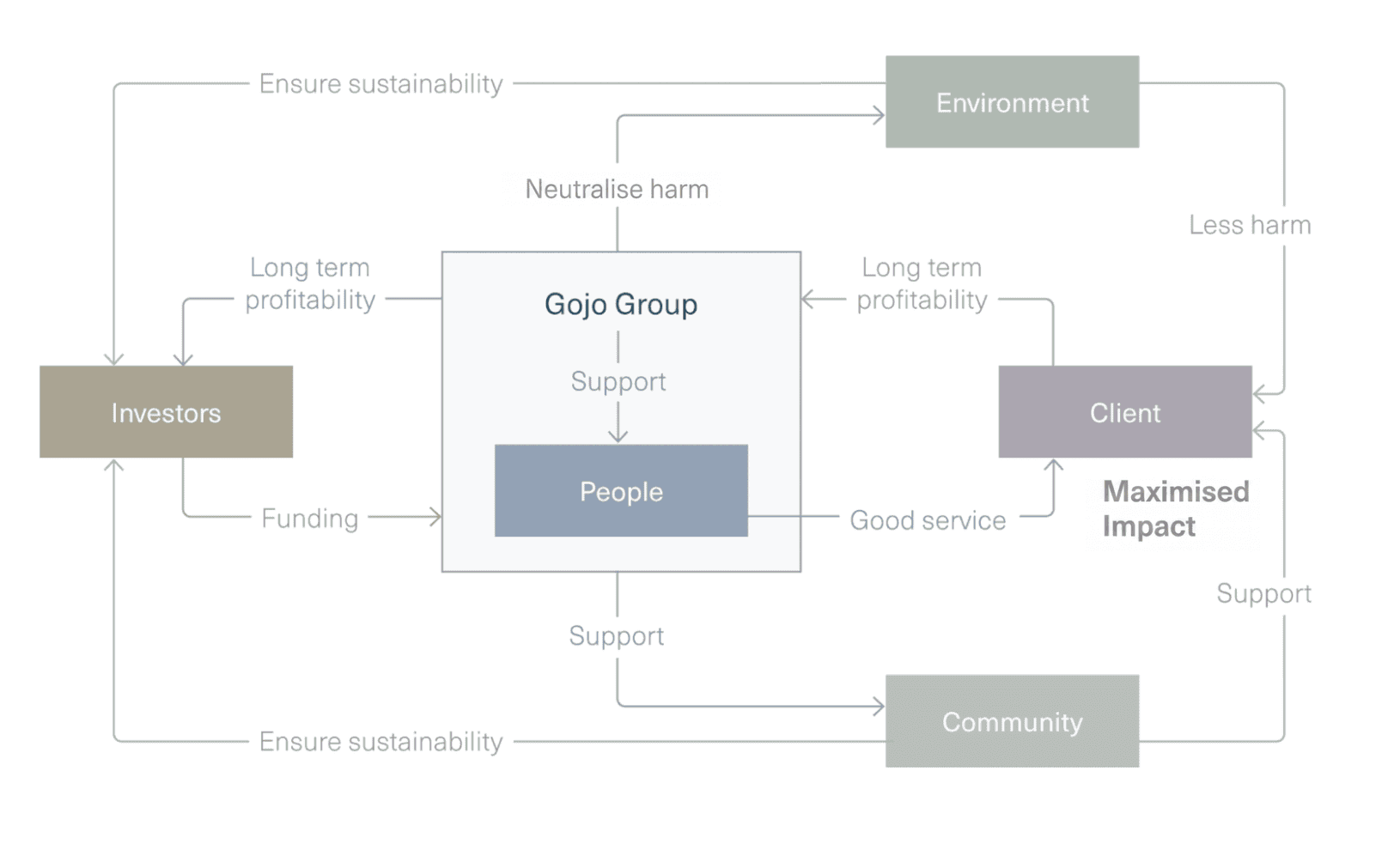
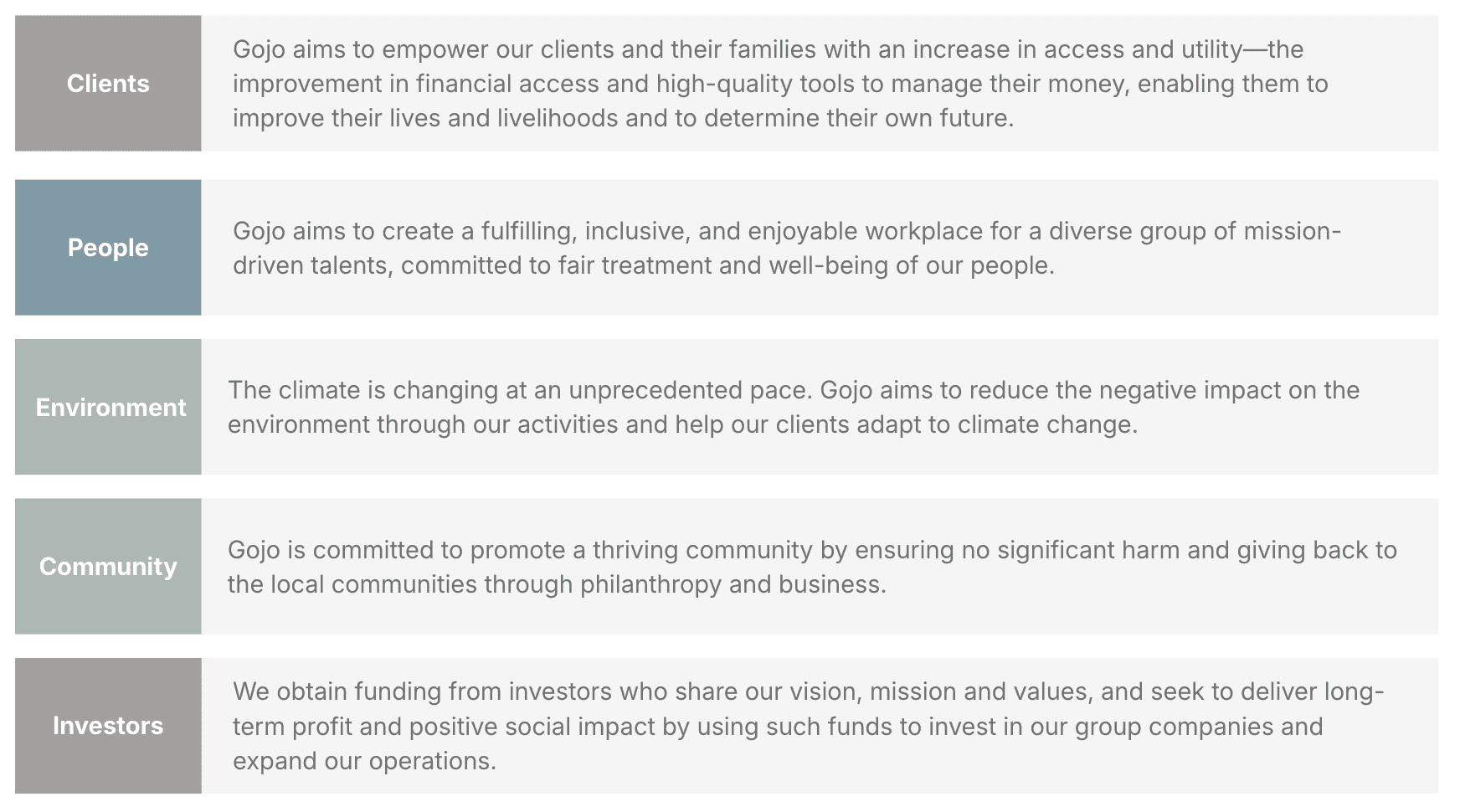
Gojo is committed to improving clients’ circumstances by extending financial inclusion. At the same time, long-term positive impact for clients is only possible in the context of thriving employees and local communities, environmentally-sustainable activities and delivering on our promises to investors. We therefore also focus on bringing a positive impact to our People, Environment, Community, and Investors.
The diagram illustrates the process we go through to create stakeholder impact and shows the causal effect each stakeholder has on all the others, which will eventually lead to Gojo Group’s shared vision of financial inclusion for everyone. We obtain funding from investors who share our vision, mission and values, and seek to deliver long-term profit and positive social impact by using such funds to invest in our group companies and expand our operations.
Our Materiality
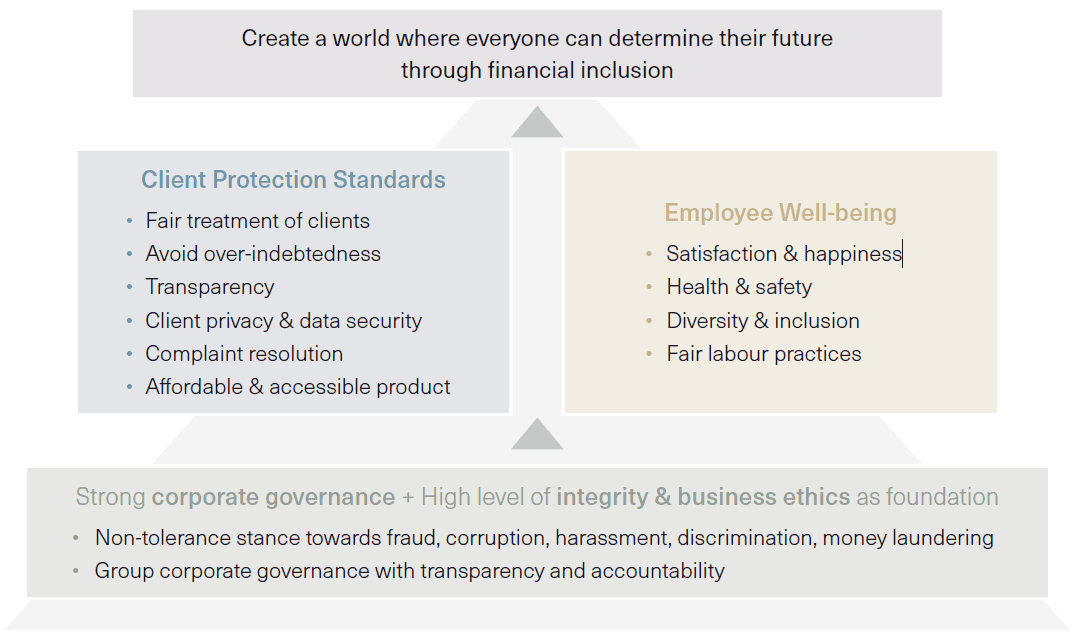
To ensure the sustainable delivery of financial services and realise our vision, we assess long-term risks and opportunities to identify key issues (materiality) that Gojo Group should prioritise. This assessment is conducted from two perspectives: that of our stakeholders and that of our management team, enabling us to allocate resources effectively. We identified the Client Protection Standards and employee well-being as two main factors to maximise impact and realise our vision, while building on a foundation of strong governance and business ethics as our Materiality.
Materiality Identification Process
Identify Potential Key Issues
We began by identifying a list of potential key issues based on our group’s mission, Guiding Principles, and business model. In doing so, we referred to global best practices, including those set by the Sustainability Accounting Standards Board (SASB).
Evaluate from Stakeholder Perspective
We then gathered input from stakeholders closely involved in our operations, such as group company management, Impact Leads, institutional investors, and nonprofit sector organisations. Using a questionnaire, we assessed the perceived importance of each issue and analysed the results.
Finalise and Prioritise Key Issues
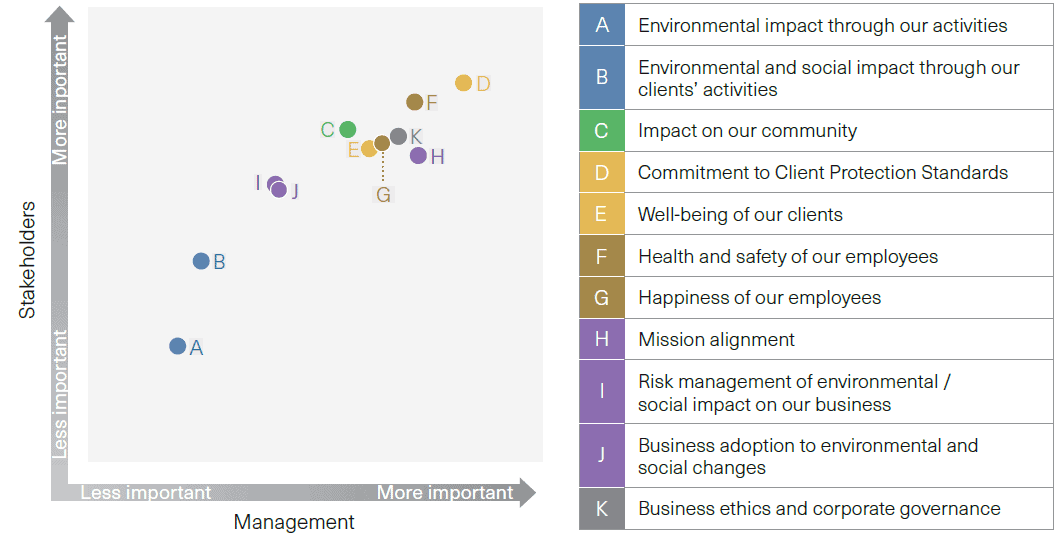
We mapped the importance of the 11 key issues from two perspectives—stakeholders and Gojo management. Based on this mapping, we finalised the materiality matrix and identified three high-priority issues that Gojo Group should focus on most.
* We conducted a survey of key stakeholders from February 15 to April 3, 2022, in which respondents were asked to rate the materiality of each issue from 1 (relatively important) to 5 (significantly important). The graph’s x-axis and y-axis starts from the value 3. Respondents include 3 board members, 8 Executive Committee members, 12 External (investors, advisors, and NPOs), 6 Gojo members, 6 CEOs and 4 Impact leads of group companies.
Gojo Group’s Materiality
Gojo prioritises the Client Protection Standards and employee well-being to maximise impact and realise our vision, building on a foundation of strong governance and business ethics.
Governance of Sustainability Management
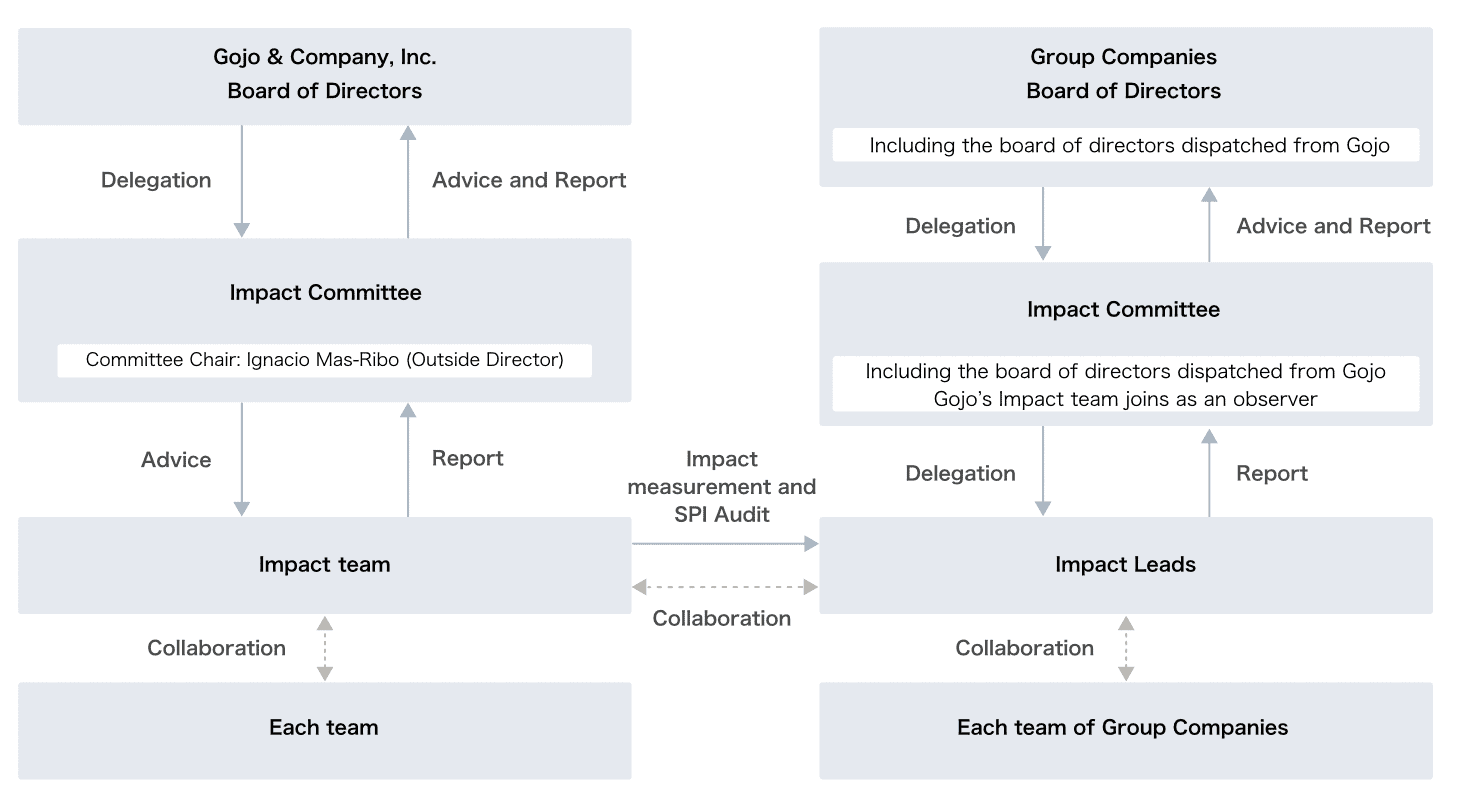
Our board of directors has ultimate responsibility for decision-making on matters in management, including sustainability-related risks, and oversight of business execution and strategies. We established our Impact Committee as an advisory committee of the board of directors. The Impact Committee assists the board’s decision-making to ensure that it always takes into account our impact on improving the lives of our group’s clients and other stakeholders’ interests. The committee monitors our group’s social impact and supports initiatives related to ESG and impact research, thereby promoting stakeholder impact across the entire Gojo Group.
Setting Social Goals
We develop social goals to ensure we have a system to reflect our mission and values in our management structure, strategy and operations, and monitor progress on an annual basis. We comprehensively monitor ESG-related indicators such as client and employee satisfaction levels and turnover, SPI audit scores, each group company’s status in obtaining Client Protection Certificates, and greenhouse gas emissions.
Our Framework on Sustainability Management
On top of our proprietary framework, we use external frameworks to measure our progress on Social and Environmental Performance (SEPM) and Impact Measurement.
USSEPM (Universal Standards of Social and Environmental Performance Management)
We seek to strengthen SEPM in accordance with the USSEPM, a framework developed by Cerise+SPTF, which establishes principles to ensure achievement of social goals and positive impact on our clients.
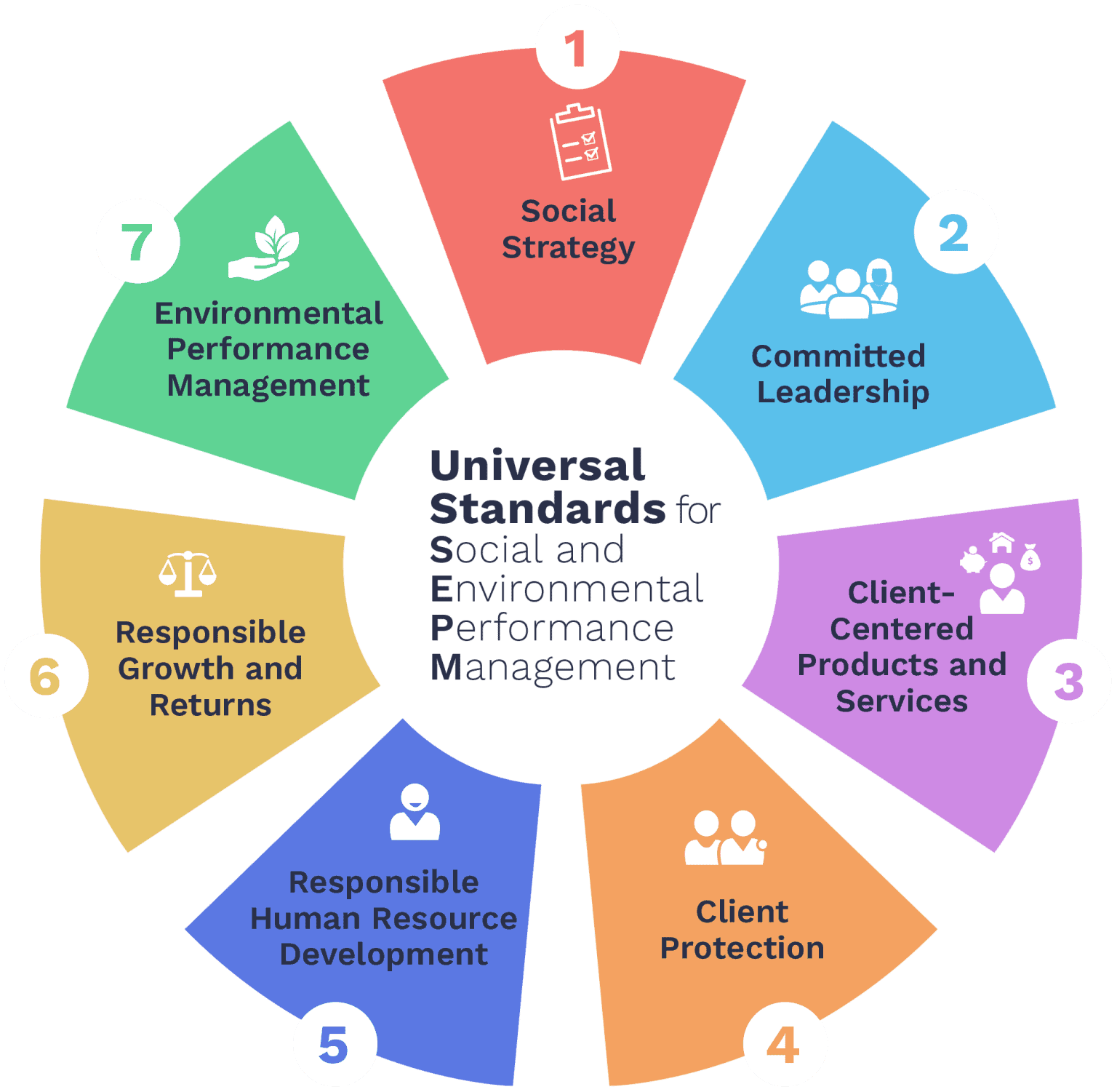
The Seven Dimensions of USSEPM and Key Initiatives
| Seven Dimensions of USSEPM | Key Initiatives |
|---|---|
| 1. Social strategy | Each group company develops a strategy aligned with its social objectives. We monitor progress through social goals to ensure effective execution. Impact Leads are appointed at each group company to lead the implementation of SEPM initiatives. |
| 2. Committed leadership | We conduct SEPM training for directors and management. Additionally, we continuously monitor the management team's progress in promoting SEPM and their reporting to the Board of Directors. |
| 3. Client-centred products and services | We design flexible products to meet client needs and enhance convenience. We try to understand client’s situations during the loan screening and repayments to assess whether we are providing services that are truly beneficial. When introducing new loan products, we carry out pilot tests and make improvements. |
| 4. Client protection | We examine the status of implementation of client protection policy at our group companies. We also conduct evaluation of client protection across our Group through third party assessment. |
| 5. Responsible human resource development | We implement our HR Policy to foster a culture that prioritises employee well-being and respect diversity. We conduct regular employee satisfaction surveys and strive to address any issues identified. |
| 6. Responsible growth and returns | We implement a Pricing Policy to ensure appropriate and transparent pricing that prevents excessive pursuit of profit. |
| 7. Environmental performance management | By implementing an Environmental Policy, we build a framework designed to manage the environmental impacts of our clients' businesses and support their adaptation to climate change. |
We apply the USSEPM framework at various stages of our operations, ranging from the selection of investment targets, monitoring of group companies after an acquisition and management support. During the pre-investment phase, in addition to business, financial and legal due diligence, we conduct social due diligence when selecting investment targets in accordance with ALINUS, a social and environmental performance assessment tool used to evaluate SEPM, including client protection, in potential investees.
After completing an investment, we require our investees to complete SPI* audits at least once every three years. Our Impact Team also monitors each group company’s progress on identified issues and provides support, including sharing group-wide best practices. Together with the Impact Leads at each group company, we jointly develop and implement action plans.
*SPI (Social Performance Indicator) is used to assess the social and environmental performance of financial institutions.
Client Protection Standards
In our microfinance business, we serve a client base that is predominately low-income and vulnerable to changes in the external environment. A principled approach to client protection is essential to preventing unfair and abusive treatment of our clients. We adopted the Client Protection Standards framework with 8 standards developed by Cerise+SPTF.
Client Protection Standards and Key Initiatives
| Client Protection Standards | Key Initiatives |
|---|---|
| 1. Appropriate product design and delivery | We offer flexible loan amounts and repayment terms to ensure product design that is convenient for clients. In rural areas, we sometimes hold centre meetings near clients’ homes to reduce their travel burden. |
| 2. Prevention of over-indebtedness | As part of credit decisions, we conduct detailed income analyses and establish internal policies, such as limiting repayment amounts to a certain percentage of income and not lending to clients with loans from more than a set number of other institutions. |
| 3. Transparency | We distribute a Key Facts Document outlining loan terms to clients and ensure verbal and written explanations are provided thoroughly. |
| 4. Responsible pricing | We have established a Pricing Policy to ensure appropriate pricing based on capital costs. |
| 5. Fair and respectful treatment of clients | We provide training to field staff to ensure client interactions are in line with our Code of Conduct. In some cases, client treatment is included as a factor in performance evaluations. |
| 6. Privacy of client data | We obtain consent regarding the handling of client data in loan agreements and provide verbal explanations at the time of disbursement. |
| 7. Mechanisms for complaints resolution | We set up complaint handling channels and aim to resolve cases within 30 days. Our Impact Team reviews complaints monthly with majority-owned group companies, and serious cases are reported to us immediately. |
| 8. Governance & HR | Each group company establishes an Impact Committee to handle client protection topics. We require them to obtain Client Protection Certification and conduct SPI audits every three years. |
Sustainable Development Goals (SDGs)
Through our microfinance business, we primarily target three Sustainable Development Goals: Goal 1: End poverty in all its forms; Goal 8: Decent work and economic growth; and Goal 10: Reduced inequalities. In addition, our group’s products include green finance and loans aimed at improving access to water and sanitation. These offerings enable us to contribute towards Goal 6: Clean Water and Sanitation and Goal 7: Affordable and Clean Energy.
Global Reporting Initiative (GRI)
Third Party Evaluations
Client Protection Certification
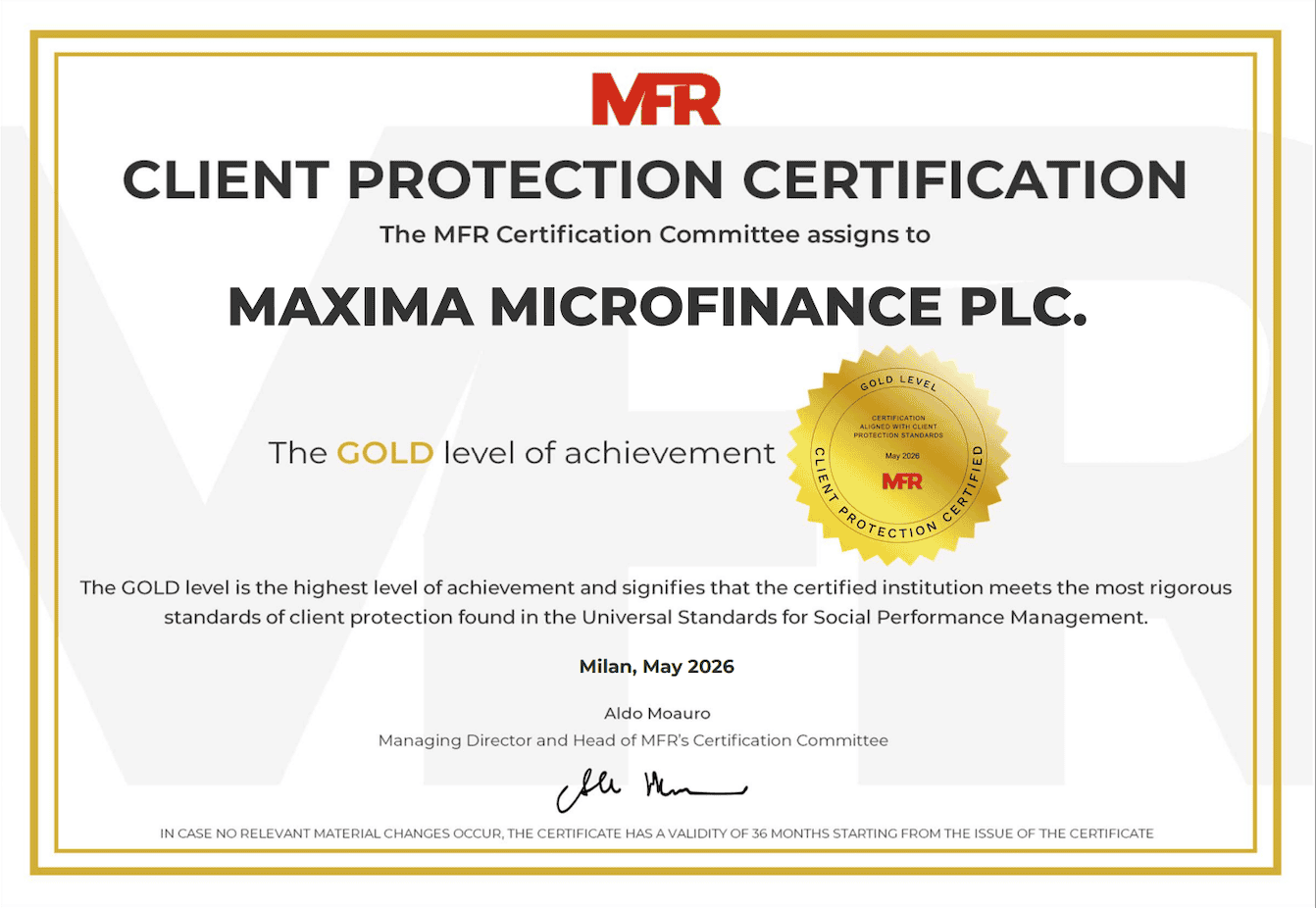
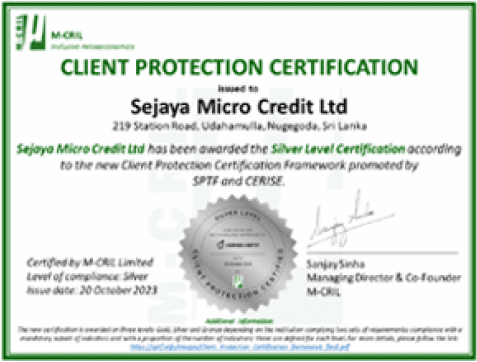
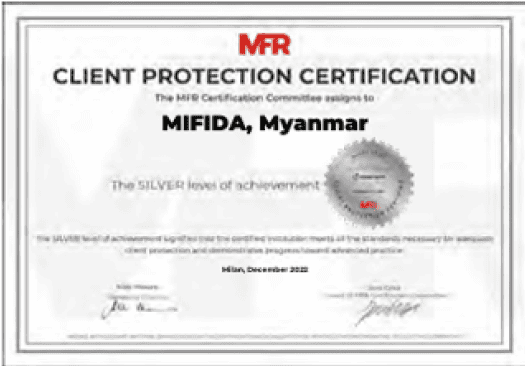
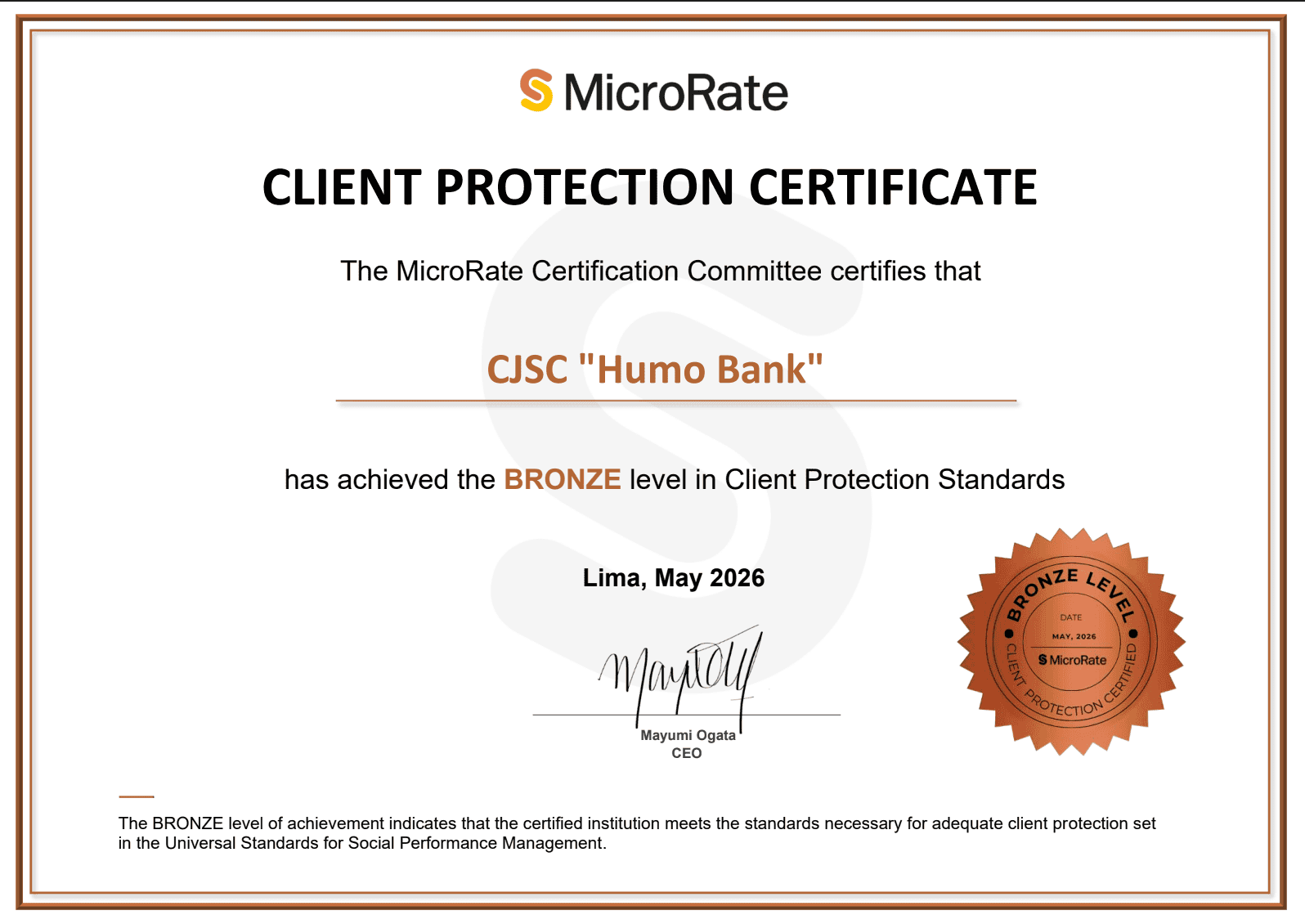
Gojo’s majority-owned group companies are encouraged to conduct client protection assessments and obtain certificates from rating agencies designated by Cerise+SPTF. As of May 2026, MAXIMA, Sejaya, MIFIDA and Humo have obtained certificates.
B Corp Certification
Gojo obtained B Corp certification, an international certification granted to corporations demonstrating high social and environmental performance. Our certification score of 102.8 points reflects our strong commitment to using business as a force for good, particularly in our mission to extend financial inclusion globally (as of January 2025). Through this certification, which encompasses both our Tokyo headquarters and majority-owned group companies, we demonstrate our dedication to balancing purpose with profit while continuously striving to create a positive impact for all stakeholders. See here for more details.
Social Finance Framework
We developed a Social Finance Framework based on the four components of the Green Bond Principles developed by the International Capital Market Association (ICMA): (1) Use of Proceeds, (2) Process for Project Evaluation and Selection, (3) Management of Proceeds and (4) Reporting. We obtained a Second Party Review from ISS Corporate regarding our Social Finance Framework. We have obtained a Second Party Review from ISS ESG Solutions, an outside consultant, regarding the alignment of our framework with ICMA principles.
Sign up to receive news from Gojo here.