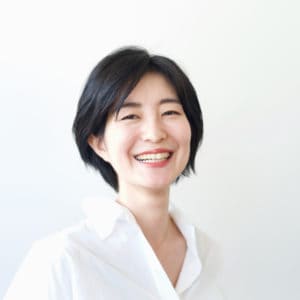

Hello, my name is Fumiyo Cho from the Gojo IR team. I joined Gojo last July, but my first encounter with the company actually goes back ten years.
In the summer of my first year of university, I participated in the International Development Planning Contest — a program aimed to solve social issues in developing countries through business. Before a week-long fieldwork trip to Indonesia, we held a preparatory retreat in Tokyo where we had the opportunity to hear from various guest speakers. One of them was Gojo's founder, Taejun. I learned about the potential of microfinance to expand people's choices, and about Gojo's seemingly boundless ambition to be a private-sector World Bank. As someone whose own choices were once limited by where and how I was born, I strongly resonated with Gojo's vision, and began to think that I wanted to work someday at Gojo — or at a company creating similar social impact.
Since startups like Gojo often don't hire new graduates, and wanting to build my own foundation first, I spent four and a half years in the Global Markets division of a foreign investment bank, followed by about a year at a Japanese real estate developer. It was at that point that the opportunity arose, and I joined Gojo last July as an IR Officer. I'd like to share what I've actually experienced working here.
Both of my previous workplaces greatly emphasise in-person communication, with frequent client dinners and internal social events. So when I first joined Gojo, I was thrown off by a reality where more than half the team was overseas and even Tokyo-based members worked mostly from home. I felt anxious about how to build relationships with colleagues. With so many members in child-rearing stages of life, after-work dinners were rare too — and I remember worrying that this might be a very dry, transactional organisation, and wondering what would happen if I couldn't fit in. Those concerns turned out to be unfounded, and today I work at Gojo feeling fully myself — thanks, I believe, to Gojo's distinctive culture and the thoughtful ways it's been built.
On the topic of remote work: since online meetings are the norm, the only chances to meet overseas colleagues in person are through business trips or offsites, which can feel isolating. But at the Monthly Member Meeting (a company-wide meeting held each month, known as the MMM), new members get a full 30 minutes to introduce themselves using slides — sharing everything from childhood to the present, including a motivation graph. That session became a natural starting point for exchanging messages and scheduling catch-up calls with colleagues. Since everyone's slides remain accessible at any time, it also helps deepen mutual understanding. I think this is what ensures psychological safety even in a text-and-video-first environment, and keeps relationships from feeling cold or distant. The MMM also gives everyone a chance to see each other's faces, hear updates from teams I don't usually interact with, and sometimes break out into smaller group discussions — all of which helps build genuine understanding of members across the company.
Another reason for our sense of unity, I think, is that there are deliberate structures in place to help each member stay connected to their life mission and the company’s mission. In our quarterly company-wide Guiding Principles sessions, we discuss topics that tend to spark disagreement and that many of us rarely get to talk about in everyday Japanese social settings, such as: "What do you think about the fact that people in developed countries working on developing-world issues earn far more than those working in those countries?" The question of what it means to work at Gojo, and what we owe to our clients, is also reinforced regularly through the weekly management meeting (open for all members to observe) and through day-to-day conversations. I feel genuinely fortunate to be moving forward together with teammates who share the same purpose.
More than anything, though, it is the diversity of the environment that allows me to bring my whole self to work here. Gojo's office near Kitasando is neither large nor fancy — the number of houseplants far outnumbers the people. Since most members work from home, on any given day without a special event, only a handful of people are in. Yet the space is warmly decorated with photos of clients taken during Taejun's visits to our group companies, and with handicrafts from the countries where those companies operate. The atmosphere is wonderfully homey — perhaps a little too homey: I was genuinely surprised, when I first joined, to see a colleague working cross-legged on the sofa with their shoes off. Taejun himself is in the office almost every day, even if only briefly — and he's the type to embrace freedom even at work. He's been known to join Executive Committee meetings while air-drumming or grinding coffee beans, and we've even had an independent director join a Board meeting from a beautiful garden in Spain. At my previous workplaces, any of this would have been absolutely unthinkable, and I probably would have judged it harshly through my old lens. But I quickly came to understand that it wasn't a lack of seriousness — the meetings are genuinely intense and substantive. The Gojo culture is: if you're doing what needs to be done and delivering results, the form doesn't matter. And I think it's precisely that freedom that makes it completely natural to have a colleague join a meeting while holding their baby — and that enables each of us, even amid busy days, to hold onto our personal lives and continue working in ways that reflect our own diverse choices.
Generating social impact while sustaining profitability, and achieving Gojo's mission, is anything but easy. But I hope to keep moving forward, step by step, together with my teammates.
In the meeting room of our plant-filled office
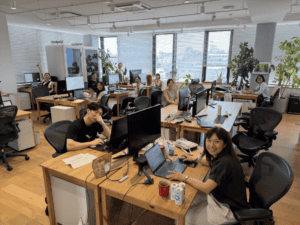
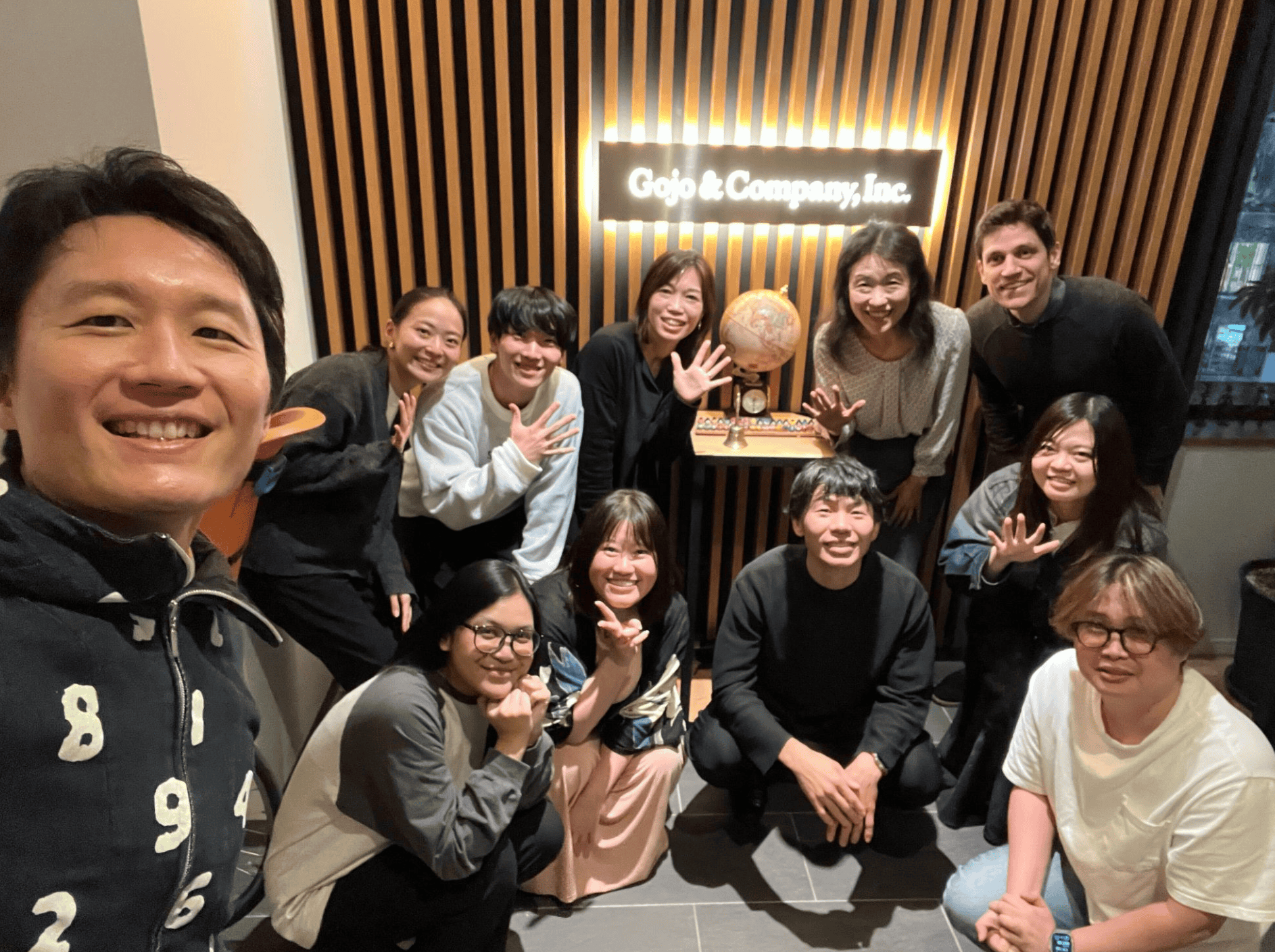
A day when more members than usual came into the office
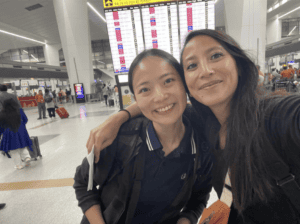
On a business trip to India with a France-based colleague
Fumiyo Cho
IR Officer, Gojo & Company, Inc.